Un reciente reportaje de la Agencia Andina de Perú pone sobre la mesa una cifra…
Chile’s Next Wealth Battle: Generational Transition Is Redefining the Country’s Biggest Businesses
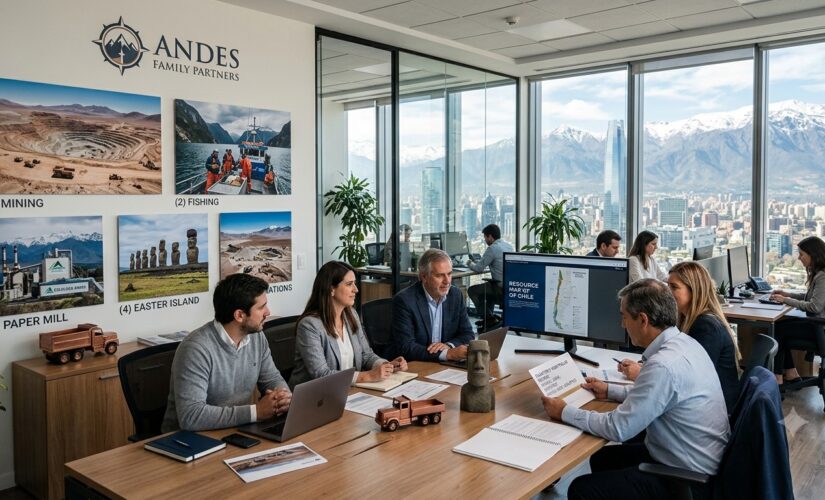
Mining, retail, wine, salmon farming, real estate and international trading are at the center of one of Chile’s largest wealth transfers in decades. Industry experts say the biggest opportunities will lie not in creating new fortunes, but in managing private wealth, professionalizing family businesses and accelerating global expansion.
Chile is entering one of the most significant generational wealth transitions in its modern economic history. As founders of the country’s largest companies gradually hand over leadership to their children and grandchildren, a new generation of business leaders faces a different challenge from that of their predecessors: no longer simply creating wealth, but preserving, managing and growing it in an increasingly global investment landscape.
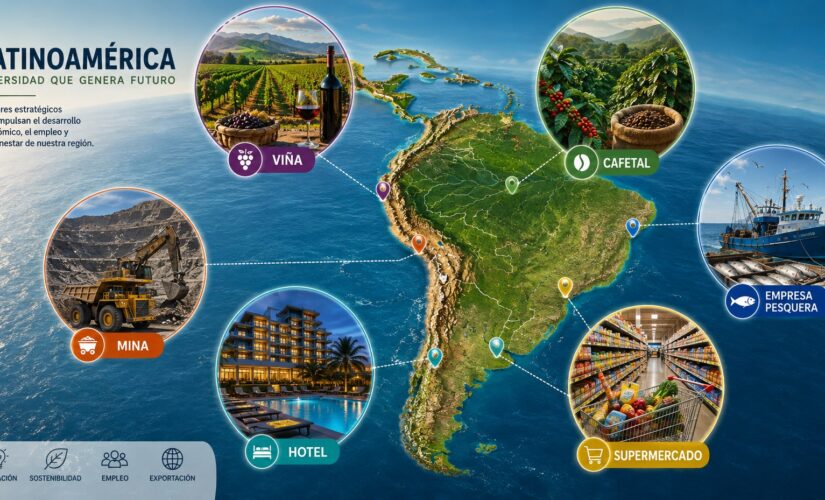
The transition spans nearly every strategic sector of the Chilean economy, including mining, retail, wine, salmon farming, real estate, international trading, energy and financial services.
At the same time, Chile’s capital markets continue to mature, driving growing demand for professional wealth management structures such as family offices, private investment funds and international portfolios.
«Chile is undergoing a quiet but profound economic transformation. Wealth is becoming less concentrated in operating businesses and increasingly managed through diversified investment portfolios with a global perspective,» market analysts observe.
A Different Generation of Business Leaders
Unlike the entrepreneurs who built their companies three or four decades ago, today’s successors were educated in a highly connected, international and digital environment.
Many hold degrees from leading overseas universities, have worked for multinational corporations and approach business with a strong focus on innovation, sustainability and diversification.
This new mindset is reshaping how Chile’s business families allocate capital.
Rather than reinvesting profits exclusively into their core businesses, they are increasingly diversifying across financial assets, infrastructure, private equity, technology, renewable energy and international investments.
Mining: From Copper to Global Capital Allocation
Mining remains Chile’s primary engine of wealth creation, particularly through copper and lithium.
However, many families linked to the sector have begun deploying profits generated during recent commodity cycles into broader investment strategies.
Real estate funds, infrastructure, venture capital, artificial intelligence and international assets are becoming increasingly common components of their portfolios.
Retail: Beyond Stores to Financial Ecosystems
Chile’s retail industry has evolved well beyond traditional department stores.
Large retail groups have transformed themselves into integrated financial, logistics and technology platforms.
Today, e-commerce, payment solutions, insurance and financial services account for a growing share of revenues.
For the next generation of executives, competitive advantage lies less in selling products than in managing integrated customer ecosystems.
Wine and Salmon: Global Industries Enter a New Phase
Chile’s wine and salmon industries have generated substantial family wealth over several decades.
Both sectors are now entering a new stage of development.
Wine producers are strengthening their positioning as premium global brands by expanding wine tourism, gastronomy and hospitality.
Meanwhile, the salmon industry faces the challenge of balancing international growth with increasingly demanding environmental and sustainability standards.
Real Estate and International Trading: Hidden Sources of Wealth
A significant share of Chile’s private wealth has also been built through real estate development and international trading.
Companies specializing in food, minerals, forestry products and wine exports have quietly developed global businesses that often remain outside the public spotlight.
At the same time, family-owned real estate groups are shifting from traditional property development toward long-term income-producing assets, including logistics centers, multifamily residential projects and industrial parks.
The Rise of Family Offices
One of the clearest beneficiaries of this transition is the wealth management industry.
An increasing number of entrepreneurial families are establishing family offices to professionalize the management of their assets.
These structures are expanding beyond traditional equities and fixed income into infrastructure, private equity, private credit, technology, venture capital and international investments.
The trend mirrors developments that unfolded years earlier in the United States and Europe.
Beyond Succession: A Transformation of Corporate Ownership
According to Maximiliano Morales, strategic projects advisor, the shift extends far beyond traditional succession planning.
«Chile is entering a stage where the central challenge will no longer be creating new fortunes, but professionally managing the wealth accumulated over several decades. Generational transition requires companies to strengthen corporate governance, embrace innovation and connect family-owned businesses with global markets. Those able to combine legacy with strategic vision will lead the country’s next phase of business growth.»
Morales adds that this transformation also creates significant opportunities for firms specializing in financing, strategic advisory services, international expansion and long-term investment management.
Innovation as the Defining Competitive Advantage
Juan Carlos Núñez, Managing Director of Urkan Innovación, believes the generational transition also represents a cultural shift inside organizations.
«The next generation inherits more than companies—it inherits the responsibility to transform them. Innovation is no longer a stand-alone initiative; it becomes part of the core business strategy. Digitalization, artificial intelligence, automation and new business models will be decisive in maintaining the competitiveness of traditional industries such as mining, wine, salmon farming and retail.»
According to Núñez, family-owned businesses that embed innovation at the board level will be better positioned to compete internationally and attract new sources of capital.
A Defining Decade
International studies project that Latin America will experience one of the largest intergenerational transfers of private wealth in its history over the next decade.
Chile is no exception.
The transition is already underway and is reshaping the country’s corporate landscape.
For the next generation of business leaders, success will depend not only on preserving family legacies but also on building organizations that are more innovative, globally connected and sustainable.
In this new era, competitive advantage will increasingly be defined not by the ability to create wealth, but by the ability to manage it strategically, expand it internationally and transfer it successfully to future generations.
For more information, please contact Maximiliano Morales via WhatsApp at +56 9 3251 7848 or max@amixtechlab.com

Entradas relacionadas

Comments (0)