
By Dr. Alex Ovalle Letelier Cultural Historian and Communicator Last April marked the 30th anniversary…
The Unfinished Chapter of Chile’s Whaling History: An Opportunity for Scientific Touris
The Unfinished Chapter of Chile’s Whaling History: An Opportunity for Scientific Tourism
As Chile continues strengthening its international positioning through national parks, marine protected areas, and whale-watching destinations, an important historical chapter remains largely overlooked: the preservation and interpretation of the country’s whaling heritage.
Throughout much of the twentieth century, locations such as Quintay, Chome, Corral, Chiloé, and numerous territories across Patagonia were centers of intensive whaling activity. Thousands of whales were harvested and processed in industrial facilities that today remain abandoned, forgotten, or in various stages of deterioration.
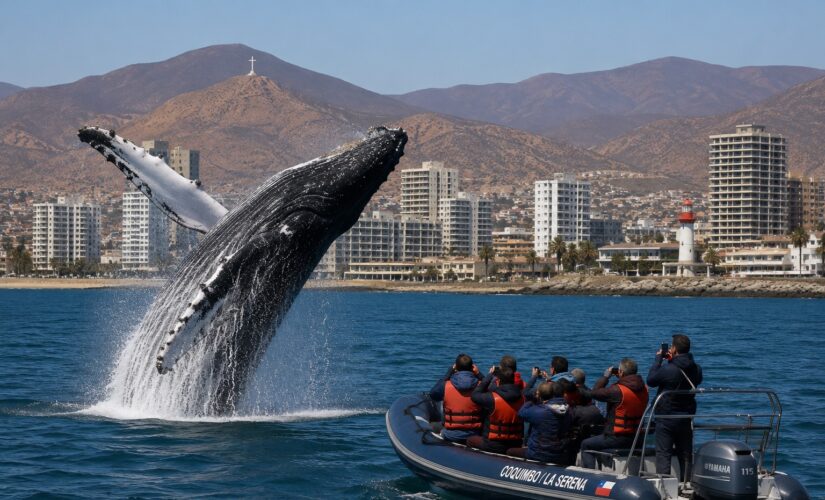
The Port of Coquimbo also played a strategic role for national and international vessels operating throughout the South Pacific during the nineteenth and twentieth centuries. Historical records document visits by American, British, and Norwegian whaling ships that used the port for supplies, maintenance, and repairs.
Paradoxically, while Chile has become one of the world’s strongest advocates for whale conservation, much of the history that explains this transformation remains invisible to younger generations.
According to Maximiliano Morales, advisor on strategic tourism, innovation, and territorial development projects:
«The restoration of former whaling stations should not be interpreted as a glorification of whale hunting. Quite the opposite. These sites should become tools for environmental education, historical memory, and public awareness about the evolving relationship between humanity and the oceans.
We should develop interactive museums, interpretation centers, marine research laboratories, educational facilities for students and visitors, and scientific tourism programs within former industrial complexes. These spaces can help people understand how our relationship with these giants of the sea has evolved over time.»
International experiences in Norway, Iceland, Canada, Australia, and the United States demonstrate that the adaptive reuse of maritime industrial heritage can become a powerful driver of economic development for coastal communities. Such initiatives generate employment, attract culturally motivated visitors, and strengthen local identity.
Chile possesses a unique competitive advantage. Its coastline encompasses some of the most important migratory routes for blue, humpback, sei, and fin whales in the Southern Hemisphere. Chiloé, the Gulf of Corcovado, the Patagonian fjords, and the Strait of Magellan constitute natural laboratories of global significance for scientific research and environmental education.
The combination of historical heritage, marine conservation, technological innovation, and scientific outreach could give rise to a new generation of coastal scientific tourism destinations capable of attracting researchers, students, documentary filmmakers, marine wildlife observers, and travelers seeking meaningful educational experiences.
This vision requires strategic collaboration among government agencies, universities, research centers, marine conservation organizations, regional governments, and private-sector stakeholders committed to sustainable coastal development.
According to Amix Tech Lab, a consultancy specializing in strategic development projects, Chile has an opportunity to become a Latin American leader in scientific tourism linked to maritime history, whale conservation, ocean protection, and marine biodiversity.
Transforming former whaling stations into centers of education, remembrance, and science would not only preserve an important part of Chile’s history, but also help create a new narrative for future generations—one in which knowledge, conservation, and innovation replace the unsustainable exploitation of natural resources.
Chile’s former whaling stations can evolve from forgotten ruins into beacons of education, research, and environmental awareness for the future.
Finally, Maximiliano Morales notes that he has received support from prominent international leaders to advance this vision for coastal development initiatives. This support stems in part from his previous work as a Wine Specialist aboard expedition cruise vessels, where he organized bilateral Chilean and Argentine wine tastings for international travelers.
Among those supporting the concept is Ximena Córdova, Director of the Emma Darwin Foundation in the Galápagos Islands, an organization dedicated to marine ecosystem research, education, and conservation. Their shared vision focuses on developing experiences inspired by scientific and sustainable tourism models, with particular interest in the Chilean Pacific coast.
For organizations interested in strategic projects related to scientific tourism, territorial innovation, and the preservation of coastal heritage, additional information is available at:
📞 +56 9 3251 7848
✉️ max@amixtechlab.com

Entradas relacionadas

Comments (0)